

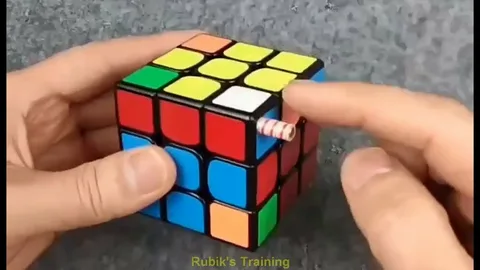
The Rubik’s Cube is more than just a colorful puzzle—it is a symbol of creativity, intelligence, and global culture. Its journey from a simple invention to a worldwide phenomenon is a story filled with innovation, challenges, and widespread fascination. In this article, we explore The Fascinating History of Rubik’s Cubes: From Invention to Global Phenomenon, tracing its origins, rise to fame, and cultural impact.
The Birth of a Genius Idea
The story begins in 1974, when Hungarian architect and professor Ernő Rubik created the first prototype of the cube. Originally called the “Magic Cube,” it was designed as a teaching tool to help students understand three-dimensional geometry. The puzzle featured six faces, each with nine squares that could be twisted and turned, making it a deceptively complex challenge.
Ernő Rubik didn’t initially realize he had created a global sensation. His invention was intended for educational purposes, yet its intricate design and endless possibilities captured the imagination of everyone who encountered it.
From Hungary to the Global Stage
By 1980, the Rubik’s Cube had made its way to international markets and was rebranded as the “Rubik’s Cube.” Its release sparked a worldwide craze. Puzzle enthusiasts, students, and even celebrities competed to solve the cube, and it became a cultural icon of the 1980s. Competitions and “speedcubing” communities emerged, celebrating the skill and mental agility required to master the cube.
The Rubik’s Cube also appeared in movies, television shows, and advertisements, solidifying its place in popular culture. Its appeal crossed age, language, and cultural barriers, making it a true global phenomenon.
The Cultural Impact and Enduring Popularity
The Rubik’s Cube continues to captivate people today, decades after its invention. Beyond being a puzzle, it has inspired art, music, and even scientific research in algorithms and mathematics. Modern speedcubing competitions draw participants from all over the world, showcasing incredible feats of dexterity and problem-solving.
Merchandising and themed variations—such as the 2×2 cube, 4×4 cube, and even electronic versions—demonstrate its adaptability and enduring popularity. This evolution highlights why The Fascinating History of Rubik’s Cubes: From Invention to Global Phenomenon remains relevant in modern times.
Conclusion
The Rubik’s Cube is a testament to human creativity and the universal love of challenges. From Ernő Rubik’s initial educational prototype to its status as a worldwide phenomenon, the cube has influenced generations and continues to inspire innovation. Its colorful squares are more than just a puzzle—they represent curiosity, intelligence, and a shared passion that transcends borders.
Truly, exploring The Fascinating History of Rubik’s Cubes: From Invention to Global Phenomenon reveals not only the story of a puzzle but also the power of an idea that captivated the world.
